
I like designing things.
I’m hoping to use this blog as a way to chronicle the (very clever) ideas I have, designs I make, and robots I build.
I’m hoping to use this blog as a way to chronicle the (very clever) ideas I have, designs I make, and robots I build.
I love robotics. However, I don’t think I would enjoy it nearly as much if I was unable to share my love of it with others. Naturally, I was very excited when a mentor from my old FRC team invited me to talk about how to succeed at robotics to her FTC team, which is in its second year. The students are all middle school age, and the mentors are all new to the FTC scene. This didn’t make it much less intimidating to talk in front of (mostly) strangers, although it did mean that they would believe most of what I said.
I had made a list of topics I wanted to cover in the few days leading up to it, so I had a general idea of what I wanted to cover. This being said, I didn’t really have a clear plan. Fortunately, they had their previous season’s robot out and partially disassembled, so I was able to talk and show people what I was doing. This helped a lot for me, as I was able to demonstrate what I was talking about, plus it helped me think to have my hands on the robot. I talked about a variety of things, here are the highlights:


Here are some FTC resources:
Game Manual Zero, a comprehensive guide for those starting FTC (made by a very talented group of students, including some of my friends): gm0.copr.cc
Gobilda’s website: gobilda.com
One of my favorite genres of systems to design are gearboxes. This is one of the first things I practiced doing back when I was a wee laddie in the summer of 2018. I really wasn’t particularly skilled back then, and so my main attempt to make my designs stand out was to make them unusual. The FRC season had just ended, and I had encountered timing belts for the first time. I was instantly enchanted: You can transmit power over long distances without using tensioners? Amazing.
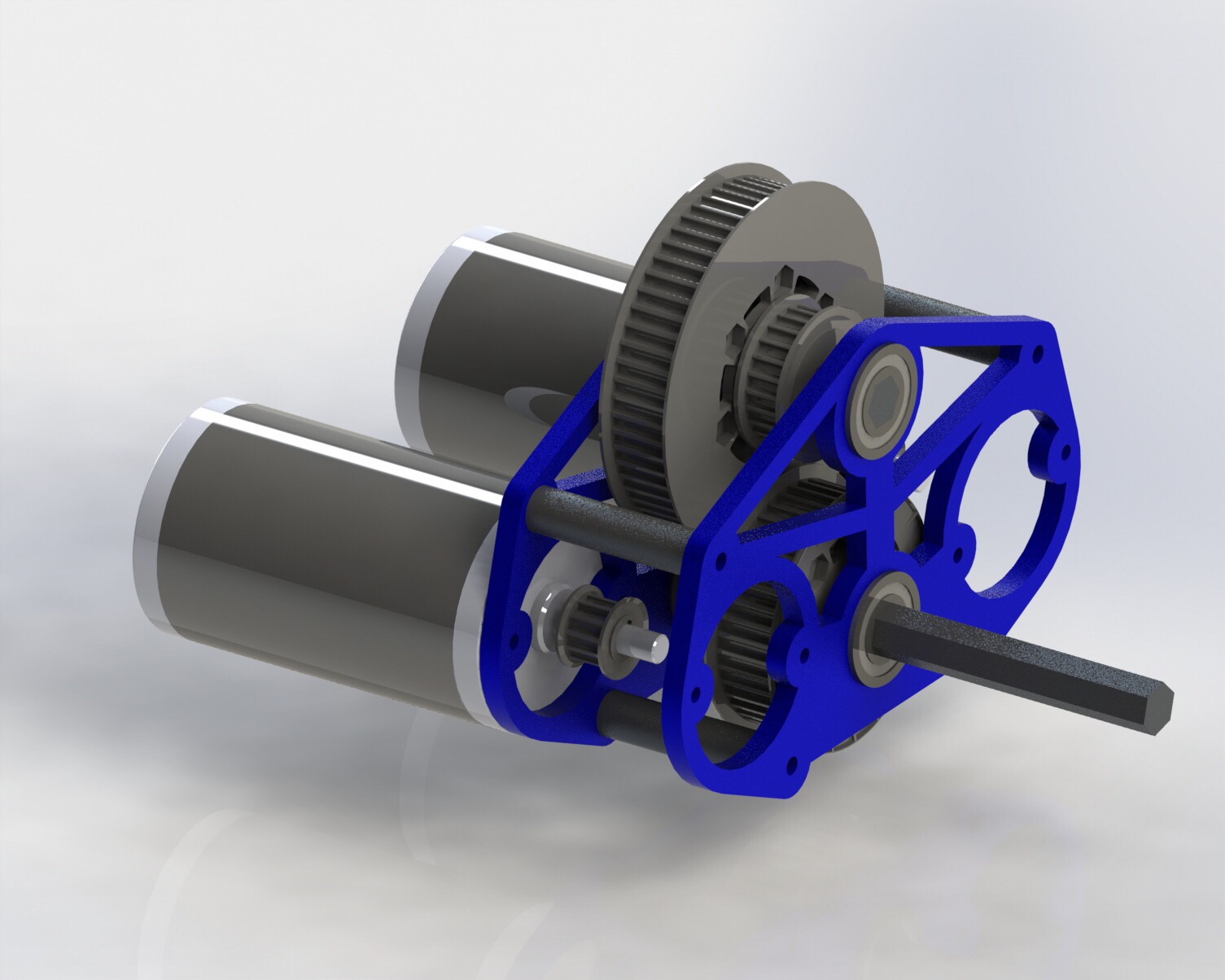
So, the natural response was to start designing everything with belts (which I still haven’t really stopped doing). What if I made a gearbox, but with belts? I even had a clever little idea for an idler to have a bit more wrap on the motor pinion pulleys. Never had the world seen such innovation.
…It didn’t quite turn out how I wanted (also, I accidentally made the drive reduction double what it should have been). I abandoned the notion as a failure. There were always more clever ideas to have, and this one didn’t seem to have been that clever. I really did like the idler though, which had a set of bearings on the same shaft as the wheels.
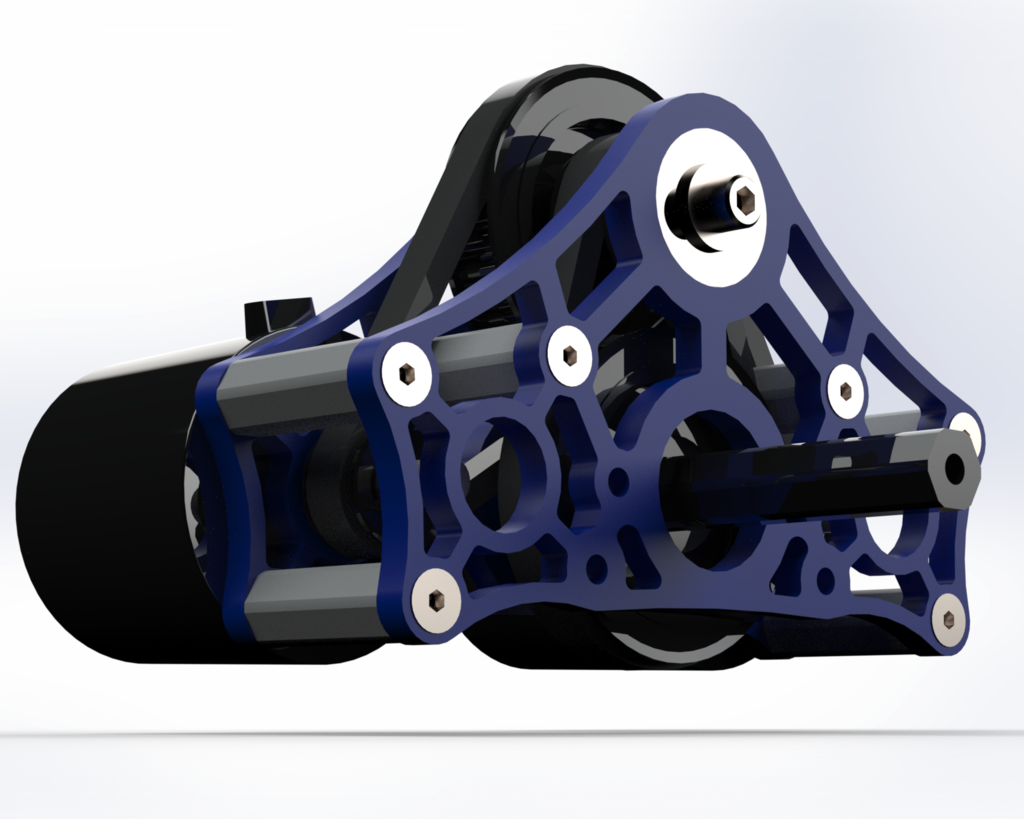
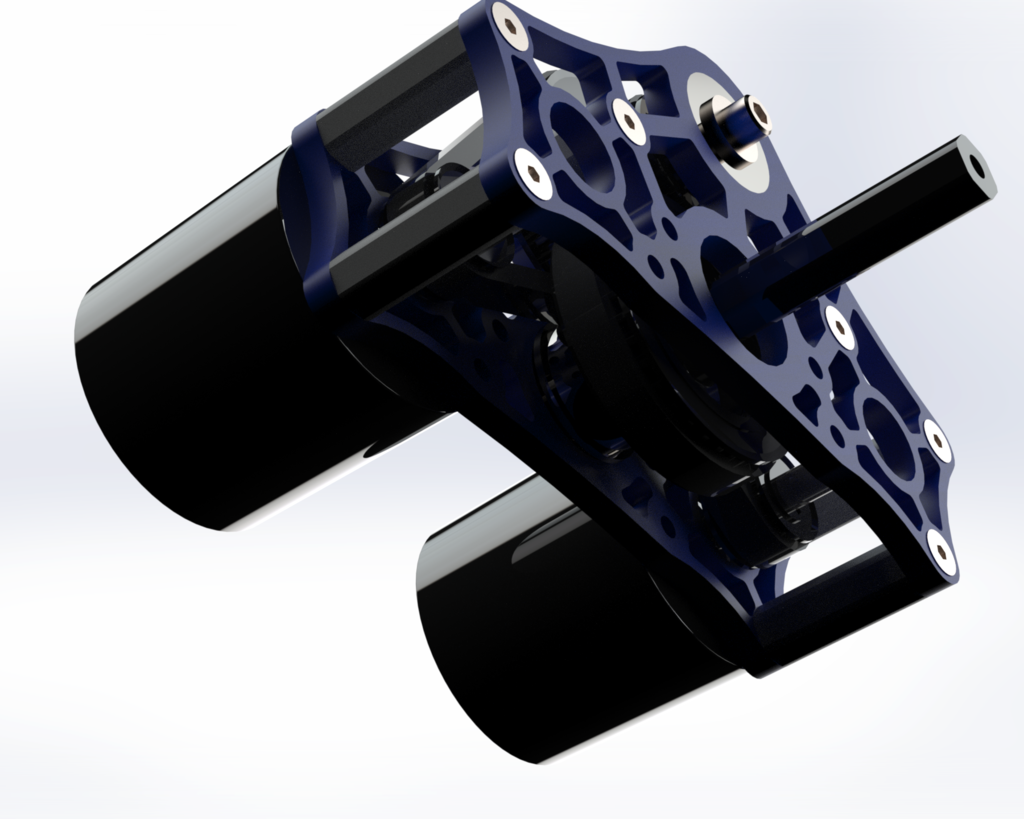
About a year passed, and as I scrolled through my pictures I saw the beltbox with new eyes. That design was even worse than I thought it was. However, the concept was pretty reasonable. I went back at it with more humility and sleep, and came up with a result I actually liked. This was actually a pretty cool idea. It ended up with a final gear reduction of 6:1, which provides a very reasonable 14-15 ft/s free speed off 3.5″ wheels. I really enjoyed re-imagining this design that I had done much earlier in my obsession with CAD, and it gave a nice sense of closure.

 Difficult Technicalities